Internal DNS: protect the directory that allows your business to work
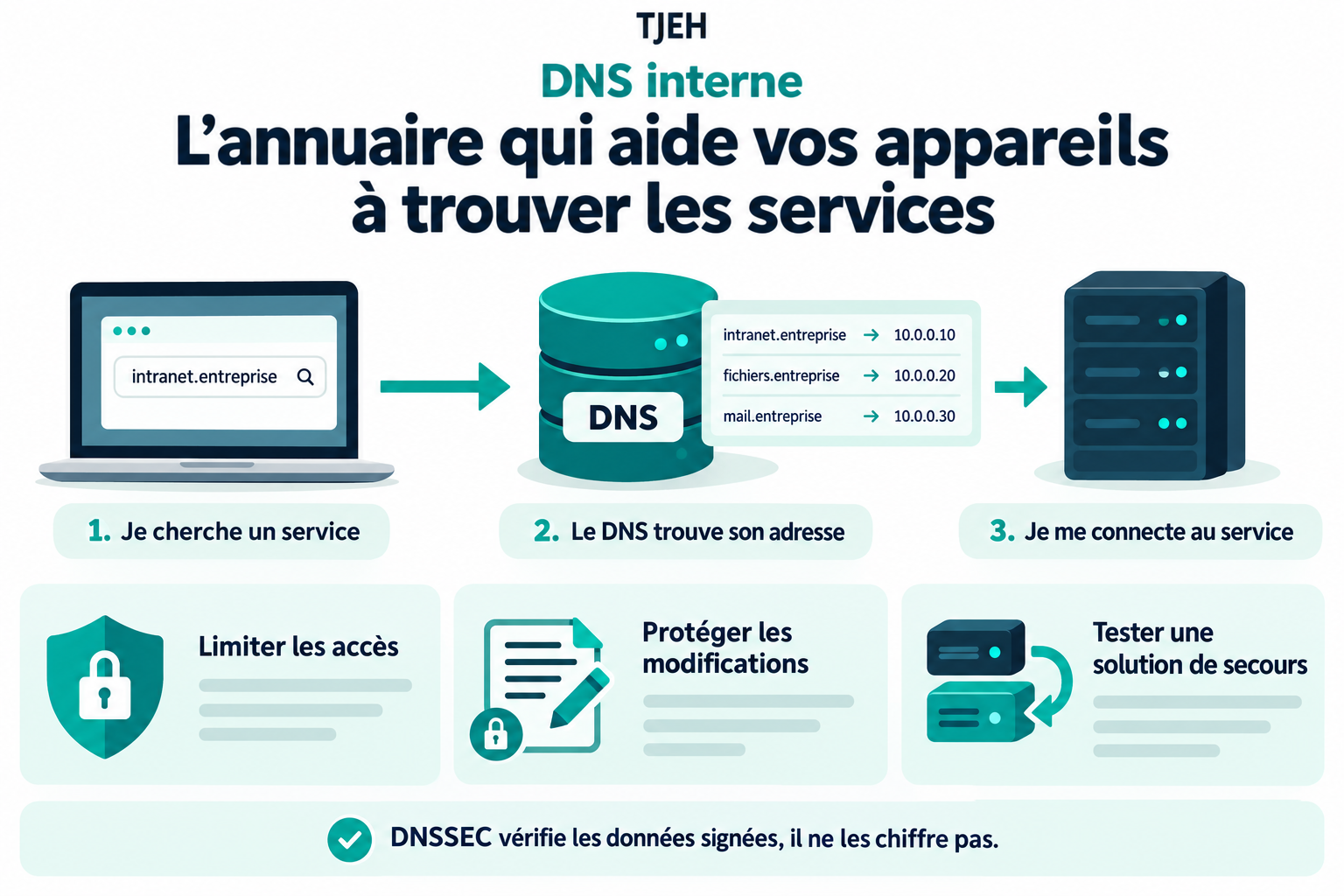
You type the name of a service, and your computer finds where to connect. The DNS plays this directory role. If it responds poorly or becomes unavailable, an application may appear to be down even though its server is still running.
To protect it, you first need to know what work each DNS server does.
Two roles to distinguish
An authoritative server provides information from the domains for which it is responsible. A resolver searches for answers for its customers. These roles can coexist, but their permissions should not be confused.
A public DNS can legitimately respond to your business domain. This doesn't mean it has to do recursive searches for anyone on the Internet.
Limit users and edits
The BIND documentation provides access control lists for queries and recursion. Define the networks actually authorized, including IPv6 when it is used.
Also protect updates and exchanges between servers. TSIG allows DNS messages to be authenticated using a shared secret; this mechanism does not encrypt their content. Zone transfers must be reserved for authorized secondary servers.
DNSSEC: check answers, not hide them
DNSSEC makes it possible to verify the authenticity and integrity of signed DNS data when validation is correctly implemented. It does not make requests confidential. Signing a zone and validating it by a resolver are two different operations.
A configuration must correspond to the installed version: copying an old BIND option can cause an error or give a false impression of protection.
Prepare for a breakdown without waiting for it to happen
Our TJEH recommendation: document the resolvers used by workstations and applications. Plan a continuity solution and test it on a limited area. Two DNS addresses are not enough if they both depend on the same server or the same network outage.
Try three things: resolve an internal service, resolve a public domain from an authorized workstation, and verify that an unauthorized client cannot use recursion. Also check the procedure for restoring zones and configuration.
The question to ask the service provider
“If our primary DNS goes down, what services continue to work and have we tested it? » A measured response during an exercise is better than assumed availability.
Official sources
Documentation consulted on October 28, 2026.